
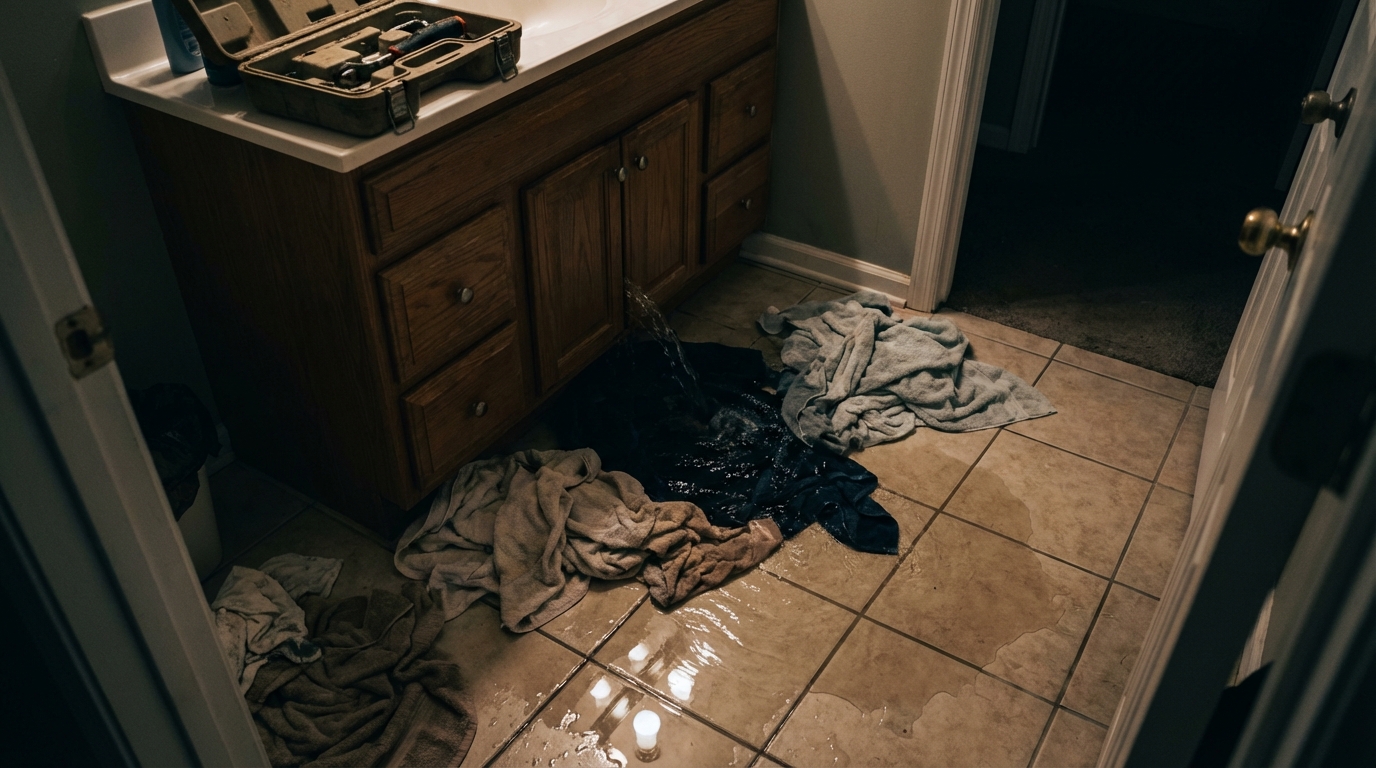
Not every plumbing issue requires a midnight phone call. A dripping faucet can wait until Monday. A burst pipe flooding your kitchen floor cannot.
Knowing the difference saves you money on after-hours fees for problems that are not urgent and protects your home from serious damage when a real emergency strikes. This guide breaks down exactly what qualifies as a plumbing emergency, what does not, what to do while you wait for a plumber, and what to expect on cost.
If you are dealing with a plumbing emergency right now, skip the reading and contact Trust First Services. We provide 24/7 emergency plumbing service across Orlando and 35+ Central Florida cities.
What Counts as a Plumbing Emergency
A plumbing emergency is any situation where delaying repair causes ongoing property damage, health risks, or loss of essential water service. These situations do not get better on their own and get worse with every minute you wait.
Burst Pipes
A burst pipe can release hundreds of gallons of water per hour into your home. The damage to drywall, flooring, cabinetry, and personal belongings adds up fast. In Orlando’s older neighborhoods, galvanized and copper pipes corrode over time. In newer developments, shifting soil or poor connections can cause joint failures.
What to do: Shut off your main water valve immediately. Then call an emergency plumber.
Active Flooding
If water is actively entering your home from any source, that is an emergency. Common causes include failed supply lines, overflowing toilets, washing machine hose ruptures, and water heater tank failures. A standard 50-gallon water heater can dump its entire contents onto your floor in under 10 minutes.
In Central Florida’s humid climate, standing water creates mold risk within 24 to 48 hours. Fast response is the difference between a plumbing repair and a mold remediation project.
Sewer Backup
Raw sewage backing up through floor drains, toilets, or showers is both a plumbing emergency and a health hazard. Sewer backups expose your household to harmful bacteria, viruses, and parasites. The smell alone makes your home uninhabitable.
What to do: Stop using all water fixtures in the home. Do not flush toilets, run faucets, or use the washing machine. Call for emergency sewer line repair with camera inspection to locate and clear the blockage.
Gas Leaks
If you smell rotten eggs or sulfur near a gas water heater, furnace, or gas line, leave your home immediately. Do not flip light switches, use electronics, or start your car in the garage. From a safe distance outside, call your gas utility company first, then call a licensed plumber for gas line repair.
Gas leaks carry the risk of explosion. This is the one plumbing emergency where you do not stay in the house to try to fix anything.
Complete Loss of Water
If every faucet in your home has suddenly stopped producing water (and your neighbors still have water), your main water line or shutoff valve may have failed. While not immediately destructive, losing all water means no toilets, no drinking water, and no cooking. For families with young children or elderly members, this situation requires same-day service.
Check with your water utility first to rule out a planned outage or street-level repair. If the utility confirms no outage, call a plumber for leak detection and water line repair.
What Is NOT a Plumbing Emergency
These problems are frustrating, but they can safely wait for a regular business-hours appointment. Calling for emergency service for non-emergencies means paying after-hours premiums for no reason.
- Dripping faucet. Annoying and wasteful, but not causing structural damage. Schedule a regular plumbing repair appointment.
- Slow drain. A slow drain that still empties is typically a partial clog. It is unlikely to escalate overnight. Book a drain cleaning appointment during business hours.
- Running toilet. A toilet that runs continuously wastes water but does not cause flooding. The internal flapper or fill valve likely needs replacement.
- Low water pressure. Unless it is a sudden, complete loss of pressure, low pressure is usually caused by sediment buildup, a partially closed valve, or a slow leak. It can wait for a diagnosis during normal hours.
- Minor leak under sink. Place a bucket under the leak, turn off the supply valve to that fixture, and schedule a repair. If the leak is spraying or you cannot shut it off, it becomes an emergency.
The general rule: If you can safely stop the water, contain the problem, and wait until morning without property damage, it is not an emergency.
What to Do Before the Plumber Arrives
While you wait for your emergency plumber, take these steps to minimize damage and help the repair go faster.
Shut Off the Water
Locate your main water shutoff valve and turn it off. In most Orlando homes, the shutoff is near the water meter at the front of the property or inside the garage. Shutting off the water immediately stops a burst pipe or active leak from causing more damage.
Know your shutoff valve location before an emergency happens. Walk outside right now and find it. If you do not know where it is, ask your plumber to show you during your next service visit.
Turn Off the Water Heater
If you have shut off the main water supply, turn off your water heater to prevent it from overheating. For electric water heaters, flip the breaker. For gas models, turn the gas valve to the OFF position.
Open Faucets to Drain Remaining Water
After shutting off the main valve, open a few faucets to drain the remaining water from the pipes. This reduces pressure in the system and limits the amount of water that can leak from a damaged section.
Document the Damage
Take photos and video of any water damage, flooding, or visible plumbing failure. This documentation is valuable for insurance claims. Capture the source of the problem, the extent of the water spread, and any damaged belongings or finishes.
Protect Your Belongings
Move electronics, documents, furniture, and valuables away from standing water. Lay down towels or use a wet/dry vacuum to remove water from floors. The faster you reduce moisture, the lower your risk of mold and secondary damage.
Emergency Plumber Cost
Emergency plumbing service costs more than a standard appointment because of after-hours labor, immediate dispatch, and the urgency of the response. Here is what to expect in the Orlando market.
| Cost Component | Typical Range |
|---|---|
| Emergency service call / dispatch fee | $150 – $300 |
| After-hours labor premium | 1.5x to 2x standard hourly rate |
| Standard plumber hourly rate (Orlando) | $75 – $150/hour |
| Burst pipe repair | $200 – $800 |
| Sewer line clearing | $300 – $600 |
| Water heater emergency replacement | $1,000 – $3,800+ |
| Main water line repair | $500 – $2,500 |
Emergency service typically costs 50% to 100% more than the same repair during business hours. That premium covers the plumber responding at 2 a.m. on a Saturday instead of during a scheduled weekday slot.
Is the premium worth it? For true emergencies (burst pipes, flooding, sewer backup), absolutely. The water damage you prevent by acting immediately far exceeds the after-hours surcharge. For non-emergencies, save money by booking a regular appointment.
Trust First Services provides transparent pricing on every emergency call. Our plumber explains the cost before starting any work. No hidden fees. No surprises.
Does Insurance Cover Emergency Plumbing?
Homeowners insurance typically covers the water damage caused by a sudden plumbing failure, but it does not cover the plumbing repair itself.
What Is Usually Covered
- Water damage to floors, walls, and ceilings from a burst pipe
- Damage to personal belongings caused by sudden flooding
- Mold remediation (if the mold resulted from a covered event)
- Temporary housing costs if your home is uninhabitable
What Is Usually NOT Covered
- The cost of repairing or replacing the pipe, fixture, or appliance that failed
- Damage from gradual leaks or lack of maintenance
- Sewer backup (unless you have a separate sewer backup rider on your policy)
- Flooding from external sources (requires separate flood insurance)
Document everything. The photos and videos you take before and during the repair support your insurance claim. Contact your insurance agent within 24 hours of the emergency to start the claims process.
Frequently Asked Questions
What is considered a plumbing emergency?
A plumbing emergency is any situation causing active water damage, health risks, or complete loss of water service. Burst pipes, active flooding, sewer backup, gas leaks, and water heater failure with flooding all qualify. The key question is whether delaying repair will cause ongoing damage to your property.
Is a slow leak an emergency?
A slow, steady drip is not an emergency if you can contain it with a bucket and shut off the water supply to that fixture. However, a slow leak behind a wall or under a slab that you cannot access or control can escalate quickly. If you notice wet spots on walls or ceilings, water stains, or a sudden spike in your water bill, schedule a leak detection appointment as soon as possible.
Should I turn off the water before the plumber arrives?
Yes. Shut off the main water valve as soon as you identify a burst pipe, active leak, or flooding. This stops the damage from getting worse while you wait. After shutting off the water, open a few faucets to drain remaining pressure from the pipes, and turn off your water heater to prevent overheating.
How much does an emergency plumber cost?
Emergency plumbing visits in Orlando typically start at $150 to $300 for the service call, with after-hours labor billed at 1.5x to 2x the standard hourly rate of $75 to $150. Total cost depends on the type and complexity of the repair. Trust First Services provides transparent pricing before work begins.
Does homeowners insurance cover emergency plumbing?
Insurance typically covers water damage from sudden plumbing failures (burst pipes, appliance failures) but not the plumbing repair itself. Sewer backup coverage usually requires a separate policy rider. Document all damage with photos and contact your insurance company within 24 hours of the event.
Call Trust First Services 24/7
When you have a plumbing emergency in Orlando, you need a plumber who answers the phone, shows up fast, and tells you the truth about what the repair will cost.
Trust First Services provides 24/7 emergency plumbing across Orlando and 35+ surrounding Central Florida cities. Here is what you get:
- ✓A real person answers your call, day or night. No voicemail trees.
- ✓Fast response. Our goal is on-site within 60 minutes.
- ✓Transparent pricing before any work starts.
- ✓Veteran-owned and minority-owned with 25+ years of home services experience.
- ✓Licensed and insured for your protection.
Plumbing emergency right now? Do not wait.
For non-emergency plumbing needs, explore our full range of plumbing services or request a quote at your convenience.