
A damaged sewer line is one of the most expensive plumbing repairs a homeowner can face. It is also one of the most confusing, because the cost varies dramatically depending on the repair method, the length and depth of the line, the type of damage, and your property’s specific conditions.
This guide breaks down the actual costs of sewer line repair in 2026, compares trenchless and traditional methods with real numbers, explains the factors that drive the price up or down, and helps you understand what your insurance will and will not cover. If you are getting quotes from plumbing companies or trying to figure out whether that slow drain is a bigger problem, this is the information you need.
Average Sewer Line Repair Cost
Sewer line repair costs in 2026 range from $1,500 to $12,000 depending on the method and scope of work. Here is a breakdown of average costs by repair type.
| Repair Type | Average Cost Range |
|---|---|
| Spot repair (localized damage) | $1,500 – $3,000 |
| Traditional full-line repair (excavation) | $1,500 – $6,000 |
| Trenchless pipe lining (CIPP) | $3,000 – $8,000 |
| Trenchless pipe bursting | $4,000 – $12,000 |
| Full sewer line replacement | $3,000 – $15,000+ |
| Sewer camera inspection | $100 – $400 |
These ranges represent Orlando-area market pricing. Actual costs depend on factors covered later in this guide.
What Drives the Cost Difference?
The wide range exists because no two sewer repairs are the same. A 10-foot spot repair on a shallow PVC line in sandy Florida soil costs far less than replacing an entire 80-foot cast iron sewer line that runs under a driveway and connects to the city main at the street.
The repair method makes the biggest difference. Traditional excavation is usually cheaper for the plumbing work itself but may cost more overall when you factor in landscape restoration, driveway repair, or concrete replacement. Trenchless methods cost more upfront but eliminate the destruction and restoration costs.
Trenchless vs Traditional Sewer Repair
This is the most important decision you will make during a sewer repair. Both methods have clear advantages, and the right choice depends on your specific situation.
Traditional Sewer Repair (Excavation)
Traditional repair involves digging a trench to expose the damaged section of pipe. The plumber removes the broken pipe and replaces it with new PVC or ABS pipe. This method has been used for decades and works in virtually any situation.
Cost: $1,500 – $6,000 for the plumbing work itself.
Pros
- Lower upfront cost for the plumbing repair
- Works on any type of damage (collapse, belly, offset, root invasion)
- Allows full visual inspection of the entire exposed line
- Suitable for severely damaged pipes that cannot be lined
Cons
- Requires digging up your yard, driveway, sidewalk, or patio
- Landscape restoration can cost $1,000 – $5,000 on top of the repair
- Driveway or sidewalk replacement can add $2,000 – $8,000
- Takes 2 to 5 days depending on scope
- Permits and city inspections may add time and cost
Trenchless Sewer Repair
Trenchless repair fixes or replaces the sewer line without digging a full trench. Two main methods are used.
Pipe Lining (CIPP, Cured-in-Place Pipe): A flexible liner coated with resin is inserted into the existing pipe and inflated. The resin cures and hardens, creating a new pipe inside the old one. This works well for cracks, small root intrusion, and moderate deterioration.
Pipe Bursting: A bursting head is pulled through the existing pipe, breaking it apart while simultaneously pulling a new pipe into place behind it. This effectively replaces the entire line without a trench.
Cost: $3,000 – $12,000 depending on method and line length.
Pros
- Minimal disruption to your landscape, driveway, and property
- Typically completed in 1 to 2 days
- New pipe lining has a lifespan of 50+ years
- No landscape or concrete restoration costs
- Less labor-intensive (fewer workers, fewer hours on-site)
Cons
- Higher upfront cost for the repair itself
- Not suitable for fully collapsed pipes (pipe lining requires an intact pipe structure)
- Limited availability for severe bellies (low spots where the pipe sags)
- Requires access points at both ends of the line
Side-by-Side Comparison
| Factor | Traditional | Trenchless |
|---|---|---|
| Plumbing cost | $1,500 – $6,000 | $3,000 – $12,000 |
| Landscape restoration | $1,000 – $5,000+ | Minimal to none |
| Driveway/concrete repair | $2,000 – $8,000+ | None |
| Timeline | 2 – 5 days | 1 – 2 days |
| Property disruption | Significant | Minimal |
| Pipe lifespan | 50+ years (PVC) | 50+ years (lined/burst) |
| Works for collapsed pipes | Yes | No (lining) / Yes (bursting) |
| Total cost (including restoration) | $3,000 – $15,000+ | $3,000 – $12,000 |
The takeaway: Trenchless repair often costs the same or less than traditional repair when you include landscape and concrete restoration. If your pipe structure is intact enough for lining, trenchless is usually the better value.
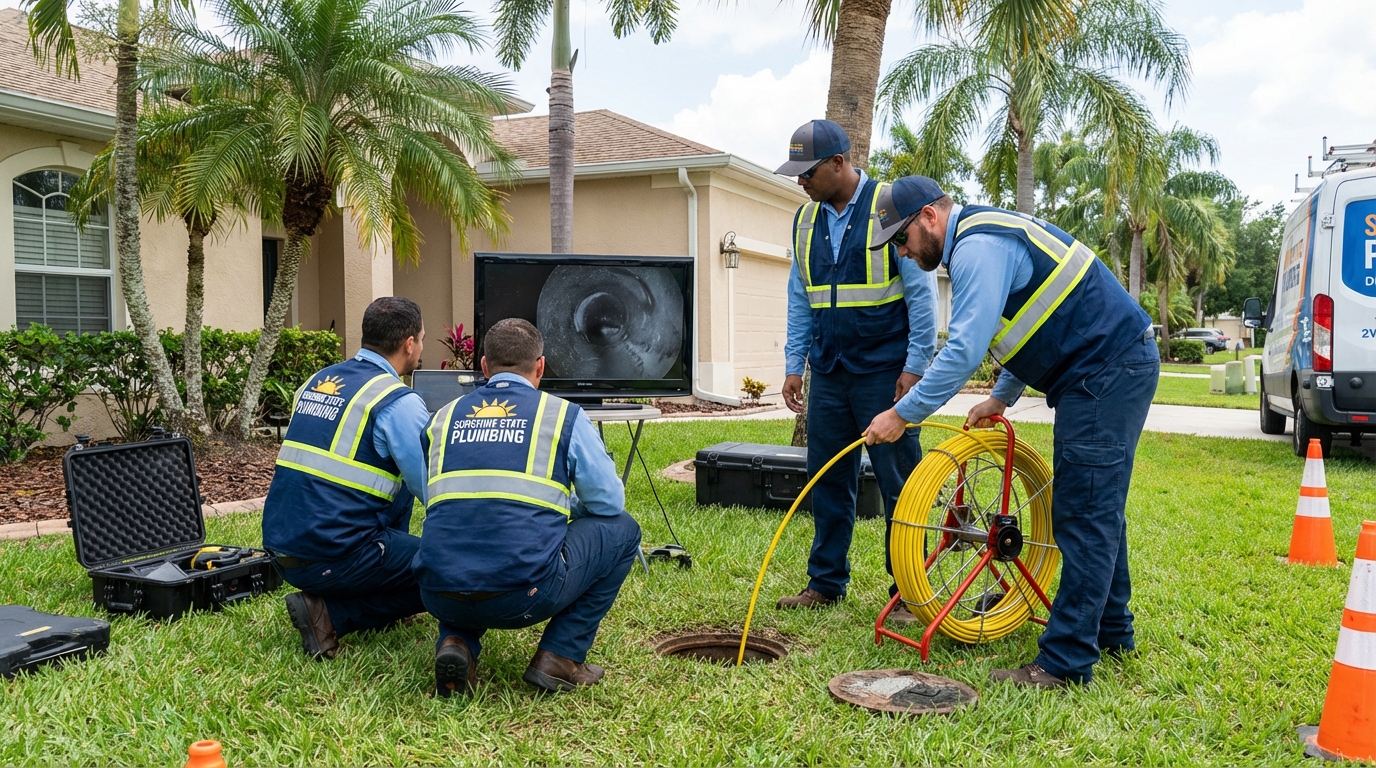
Trust First Services offers both trenchless and traditional sewer line repair and recommends the method that makes the most sense for your specific situation. We start every sewer repair with a camera inspection so you can see the condition of the pipe before making a decision.
Cost Factors That Affect Your Final Price
Several factors beyond the repair method influence your total cost. Understanding these helps you evaluate quotes and anticipate what your project may involve.
Pipe Material
- PVC/ABS (plastic): Easiest and cheapest to repair or replace. Common in homes built after 1980.
- Cast iron: Heavier, more difficult to cut and remove. Common in homes built before 1975. Cast iron corrodes from the inside out, and Orlando’s soil conditions accelerate deterioration.
- Orangeburg (bituminized fiber pipe): Found in some older Orlando homes built in the 1940s through 1970s. These pipes deteriorate significantly over time and usually need full replacement rather than repair.
- Clay/terracotta: Common in very old properties. Vulnerable to root intrusion at the joints.
Depth and Length
Sewer lines in Central Florida are typically buried 18 to 36 inches deep, though some are deeper depending on the property and the connection point to the city main. Deeper pipes cost more to access (for traditional repair) or require more material (for trenchless lining).
The length of the damaged section also matters. A 10-foot spot repair is a fraction of the cost of relining an 80-foot run from house to street.
Location on Property
A sewer line that runs under open yard is the easiest and cheapest scenario. Lines running under driveways, sidewalks, patios, pools, or landscaping add complexity and cost. Concrete removal and replacement alone can add thousands to a traditional repair.
Root Intrusion
Tree roots are one of the most common causes of sewer line damage in Orlando. Roots seek out the moisture in sewer lines and infiltrate through joints and cracks. Minor root intrusion can be cleared with a root cutter. Severe intrusion that has cracked or displaced pipe sections requires repair or replacement.
Permits and Inspections
Sewer line repairs in Orlando and surrounding municipalities typically require permits and inspections. Permit costs vary by jurisdiction but generally range from $75 to $300. Your plumbing contractor handles the permitting process, but the cost is passed through to you.
Access Points
Trenchless repair requires clean access points at both ends of the repair section. Creating access points (small excavation pits) is part of the cost. If access is difficult due to structures, hardscape, or the line’s routing, the price increases.
Signs You Need Sewer Line Repair
Sewer line problems rarely appear suddenly. The warning signs build over weeks or months. Recognizing them early gives you time to schedule a camera inspection and plan the repair before a catastrophic failure.
- Multiple slow drains. If several drains in your home are slow at the same time (especially the lowest-level fixtures), the problem is likely in the main sewer line, not individual drain lines.
- Gurgling sounds from drains or toilets. Air trapped in a partially blocked sewer line causes bubbling and gurgling, especially when you flush a toilet or run a washing machine.
- Sewage smell inside or outside your home. A properly functioning sewer line is airtight. If you smell sewage, there is a crack, break, or separation in the line allowing gas to escape.
- Wet spots or sinkholes in the yard. A leaking sewer line saturates the surrounding soil. Over time, this creates soft spots, unusually green patches of grass, or actual depressions in your lawn.
- Frequent backups. If your main line backs up repeatedly after professional drain cleaning, the issue is structural damage to the pipe, not just a clog.
- Pest increase. Rats, cockroaches, and insects can enter your home through cracks and breaks in the sewer line. A sudden increase in pests may indicate sewer line damage.
If you notice any combination of these signs, schedule a sewer camera inspection. Trust First Services uses camera technology to pinpoint the exact location, type, and severity of the damage before recommending a repair approach. A camera inspection costs $100 to $400 and can save you thousands by avoiding unnecessary excavation.
Insurance Coverage for Sewer Line Repair
Standard homeowners insurance policies in Florida typically do not cover sewer line repair. This surprises many homeowners who assume their policy protects them.
What Standard Policies Cover
- Water damage inside your home caused by a sudden sewer backup (in some policies)
- Damage from a sudden, accidental event (like a contractor accidentally hitting your sewer line)
What Standard Policies Do NOT Cover
- Sewer line repair or replacement due to age, wear, or deterioration
- Root intrusion damage
- Sewer line collapse from shifting soil or ground movement
- Gradual damage from corrosion or material failure
- Preventive maintenance or inspections
Sewer Line Coverage Options
Many insurance providers and third-party companies offer separate sewer line coverage or home warranty plans that include sewer and water lines. These plans typically cost $5 to $15 per month and cover repair costs up to $10,000 to $15,000.
If your home has cast iron, clay, or Orangeburg sewer pipes, purchasing separate coverage before a failure occurs is a smart financial decision. The cost of the monthly premium over several years is far less than an uninsured sewer repair.
Check with your homeowners insurance provider about adding sewer line coverage to your policy. Also check if your municipal water utility offers a service line protection plan, as some Florida utilities partner with third-party providers for this coverage.
Frequently Asked Questions
How much does sewer line repair cost?
Sewer line repair costs range from $1,500 to $12,000 in 2026, depending on the repair method, pipe material, line length, and property conditions. Traditional excavation repairs range from $1,500 to $6,000 for the plumbing work. Trenchless methods range from $3,000 to $12,000. When you include landscape and concrete restoration costs, total project costs are often comparable between the two methods.
Is trenchless sewer repair more expensive?
The plumbing work itself is typically more expensive for trenchless repair. However, trenchless methods eliminate the cost of landscape restoration, driveway or sidewalk replacement, and extended labor for excavation and backfill. In many cases, the total project cost for trenchless repair is equal to or less than traditional excavation when all restoration costs are included.
How much does it cost to replace a sewer line in Florida?
Full sewer line replacement in Florida ranges from $3,000 to $15,000 or more, depending on line length, depth, pipe material, and repair method. Florida’s sandy soil makes excavation easier than in rocky regions, which can lower traditional repair costs. However, high water tables in parts of Central Florida can add dewatering costs to the project.
Does insurance cover sewer line repair?
Standard homeowners insurance in Florida typically does not cover sewer line repair due to age, wear, root intrusion, or material deterioration. Some policies cover water damage inside your home from a sudden sewer backup. Separate sewer line coverage is available through insurance riders or third-party warranty plans, typically costing $5 to $15 per month.
How long does sewer line repair take?
Traditional excavation repairs take 2 to 5 days depending on the scope and whether concrete or hardscape needs to be removed and replaced. Trenchless pipe lining and pipe bursting are typically completed in 1 to 2 days. A camera inspection adds 1 to 2 hours at the beginning of the project.
What are signs you need sewer line repair?
Common signs include multiple slow drains throughout the house, gurgling sounds from drains or toilets, sewage smell inside or outside, wet spots or sinkholes in the yard, frequent main line backups even after drain cleaning, and a sudden increase in pests. If you notice multiple signs at once, schedule a sewer camera inspection for a definitive diagnosis.
Get a Sewer Line Inspection
If you are seeing the warning signs or you have already received a quote and want a second opinion, Trust First Services provides honest, transparent sewer line evaluations.
Here is how we approach sewer line repair:
- Camera inspection first. We never recommend repair or replacement without seeing inside the pipe. Our sewer camera shows you the exact condition of your line in real time.
- Clear diagnosis. We explain what is wrong, where it is, and how severe it is. No scare tactics. No pressure.
- Multiple repair options. We present both trenchless and traditional options when both are viable, with transparent pricing for each.
- You decide. We give you the information and the time to make the right choice for your home and budget.
As a veteran-owned and minority-owned company with 25+ years of home services experience, Trust First Services brings military discipline and honest communication to every job. We serve Orlando and 35+ cities across Orange, Seminole, Osceola, and Lake counties.
Need simpler drain service? Check out our drain cleaning page. For emergency sewer backups, visit our emergency plumber page for 24/7 service.